What Is Oktoberfest Beer? A Brewer’s Guide to Märzen and Festbier
There are certain things in the brewery that tell you autumn is on its way. Oktoberfest is one of them. Big steins, long tables and plenty of lager tend to come to mind first. That’s the atmosphere everybody knows. But spend a bit of time thinking about the beer itself and there’s more to it than you might expect.
When people talk about Oktoberfest beer, they’re usually talking about two closely related styles: Märzen and Festbier. One has the longer history with the festival. The other is what you’d actually be handed in Munich today. That’s part of what I find interesting about it.
From where the styles came from to what separates them in the glass, here’s how I think about Oktoberfest beer as a brewer.
What Is Oktoberfest Beer?
Oktoberfest beer is a broad term for the lager styles associated with Munich’s festival.
Historically, Oktoberfest was closely associated with Märzen, an amber, malt-forward lager brewed in March and stored through the warmer months. Today, the beer served at the modern Munich Oktoberfest is generally Festbier: paler, lighter and designed to be easy drinking over a long day of celebration.
They’re both lager styles and both put malt ahead of hops, but the difference becomes fairly obvious when you taste them side by side. Märzen gives you more colour, toasted malt and body. Festbier is golden, cleaner and a little lighter on its feet.
The Origins of Oktoberfest Beer
To understand Oktoberfest beer, it helps to understand how beer was brewed in Bavaria in the first place. Summer brewing was restricted, so brewers made a stronger batch in March and stored it through the warmer months. Märzen takes its name from that month – März in German. It was brewed to last, then drunk once the weather turned.
For a brewer like myself, that history is important. Nobody sat down and decided an amber lager would suit a festival nicely. The brewing conditions of the time helped shape the beer. Its place at Oktoberfest came later.
The equipment has changed considerably since then. That relationship between ingredients, process and the finished pint hasn’t, and it’s still something we think about in our own brewery.
What Is Märzen Beer?
Märzen is an amber lager with malt firmly at the centre. Bready, lightly toasted, restrained on the bitterness, clean on the finish. That’s what I’d expect from a good one.
For me, malt is where Märzen really starts to make sense. You want depth. It shouldn’t tip into heavy or sweet, though, and getting that balance right is most of the job.
If you know our Farmer’s Best, then you’ve probably tasted something similar to a Märzen beer. It’s a British ale rather than a lager, so the two beers aren’t alike in most respects. But both show how much character malt alone can bring to a glass, without needing hops to do the heavy lifting.
What Is Festbier?
Festbier is the paler style you’ll actually find at the modern Munich Oktoberfest. It shows how much the beer has moved on, even while the tradition around it has stayed largely the same.
Golden, clean, still led by malt, but lighter in character than Märzen. Enough body to feel substantial, without becoming tiring in the glass.
We think about that same balance with lager here at Ramsbury. Our Red Ram is a very different beer from a Festbier, but the principle carries across: character first, crispness close behind.
What is the key difference between Märzen and Festbier?
The simplest way to think about the difference is that Märzen is darker, fuller and toastier, while Festbier is paler, lighter and more focused on easy drinking. Both are lagers, and neither is defined by aggressive hop character. The main difference is the balance of malt, colour and body.
Strength doesn’t separate them by much either. Märzen typically sits around 5.6–6.3% ABV, while Festbier is generally around 5.8–6.3%.
| Attribute | Märzen | Festbier |
| Colour | Amber | Golden |
| Malt character | Rich, bready and lightly toasted | Lighter and cleaner |
| Body | Fuller | Lighter |
| Bitterness | Restrained | Restrained |
| Oktoberfest Connection | Historical style | Modern style |
Taste them side by side and I’d expect Märzen to give you more weight and toasted malt. Festbier feels brighter and easier going – the sort of beer that makes sense when you’re settling in for a long afternoon or evening in a festival tent.
Oktoberfest Steins and the Maßkrug
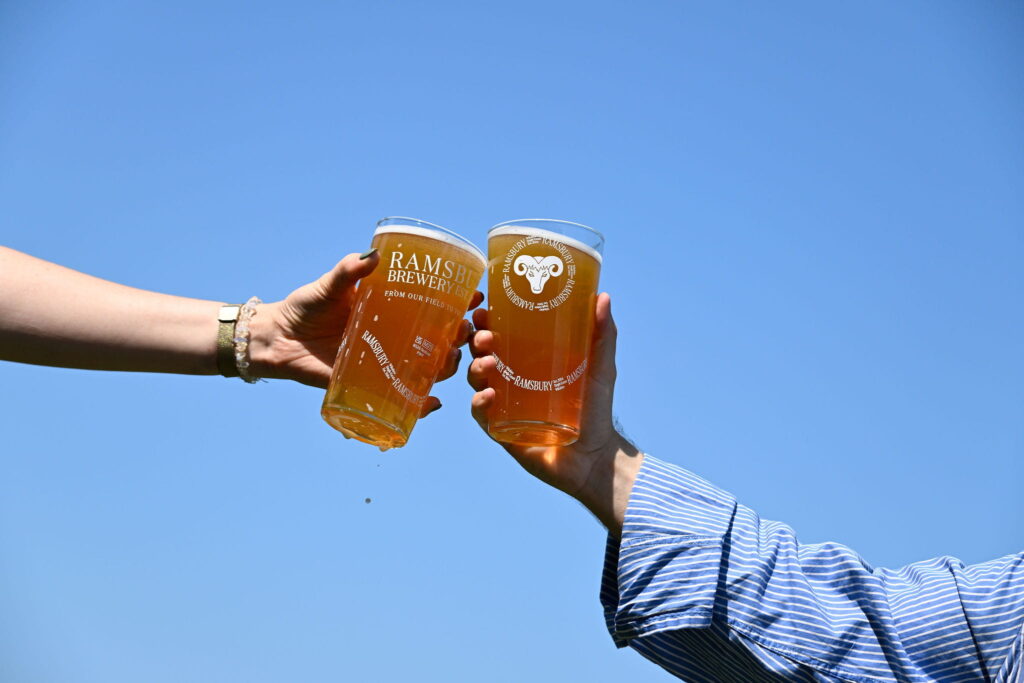
The beer is only part of the tradition. What it arrives in is fairly hard to miss too. What most of us picture as an Oktoberfest stein is known in Bavaria as a Maßkrug: a large handled beer mug built to hold a full litre. Older Bavarian beer culture leaned on ceramic and stoneware. Today’s tents are better known for thick glass.
There’s a practical reason for that sturdy build. In a crowded beer tent, mugs get carried, set down and raised for a toast more times in an evening than you’d think to count.
For me, that’s part of the experience. A litre sounds ambitious on paper. In the middle of an Oktoberfest tent, surrounded by everyone doing exactly the same thing, it suddenly makes a lot more sense.
Celebrate Oktoberfest at Ramsbury
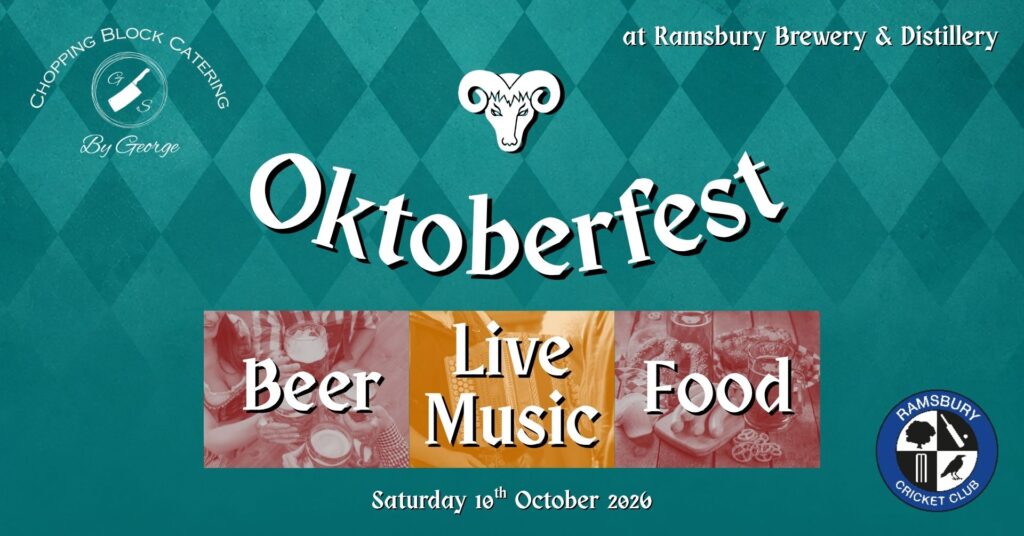
Oktoberfest has never really just been about what’s in the glass. The atmosphere around it matters just as much. That’s what we’ll be bringing to Ramsbury Estates on Saturday 10 October 2026, when Oktoberfest returns in partnership with Ramsbury Cricket Club.
Tickets are £25 and include a drink served in an Oktoberfest stein and a traditional bratwurst, with German-inspired food and a seven-piece Oompah band keeping the evening going.
If all this talk of Märzen, Festbier and steins has put you in the mood, find out more and book your place at Ramsbury Oktoberfest.
Oktoberfest Beer FAQs
Is Oktoberfest beer a lager?
Yes. Both Märzen and Festbier are lager styles. Märzen is the amber style historically associated with Oktoberfest, while the modern festival is more closely linked with golden Festbier.
What is the difference between Märzen and Festbier?
Märzen is typically darker, fuller and more toasted in character. Festbier is paler and slightly lighter, while still retaining the malt-led character associated with Oktoberfest beer.
What beer is served at Oktoberfest today?
The modern Munich Oktoberfest predominantly serves beers in the Festbier style: golden, clean lagers that balance malt flavour with easy drinkability.