What Makes a Stout a Stout
There’s a point every year when the conversations we have about beer start to change.
As the evenings draw in, people begin asking about darker beers, especially stout. Some already know exactly what they like, while others are a little more hesitant. Usually, it’s because they’ve tried a stout before that was too bitter or heavier than they expected.
I enjoy these conversations because there’s far more variety in stout than its look might suggest.
Here at Ramsbury, we brew three seasonal stouts, each with its own character. They all share that familiar dark colour, but the ingredients we use can make quite a difference to what ends up in your glass.
What Is a Stout?
Stout is a dark beer traditionally brewed using roasted malt or barley, giving it its distinctive colour and flavour. Depending on the recipe, you might notice anything from coffee-like bitterness to the softer sweetness of chocolate.
Like most beers, it starts with four ingredients: water, malted grain, hops and yeast. It’s what we do with them that makes the difference.
At Ramsbury, we grow our own barley here on the estate in Wiltshire, which is then malted for use in our brewing. Having that connection to one of our main ingredients is something we’re proud of.
For stout, we build on this foundation with darker roasted grains to develop its characteristic flavour.
What Gives Stout Its Dark Colour and Flavour?
If you’ve ever wondered why stout can taste like coffee or chocolate, much of the answer comes down to roasting.
Much like coffee beans, barley develops darker colours and deeper flavours as it’s roasted. Depending on the recipe, we can use dark roasted malts or roasted unmalted barley to give stout its characteristic colour and flavour.
Getting that balance right is one of my favourite parts of brewing stout.
Use too much roasted grain, and the beer can become harsh. Get the proportions right, and you can create something full of flavour that still feels smooth and easy to drink.
What’s the Difference Between Stout and Porter?
This is a question that comes up quite often, and the answer isn’t as straightforward as you might expect.
Stout and porter share a long history. Porter became popular in London during the eighteenth century, with stronger versions eventually becoming known as stout porters.
Today, porter is often associated with a softer, maltier character, while stout tends to have a more pronounced roasted flavour. In practice, though, there’s considerable overlap.
I’ve tasted porters with the coffee-like bitterness you’d expect from a stout, and stouts that are wonderfully smooth. The recipe often tells you more than the name alone.
What Are the Different Types of Stout?
What fascinates me about stout is how much the style can vary. Even small changes to the recipe can produce a very different beer.
Dry Stout
Dry stout is what many people picture when they think of a traditional Irish stout. With less residual sweetness than a milk stout, those coffee-like roasted flavours tend to stand out more clearly.
Despite its dark appearance, it can be quite light on the palate, although the way it’s served can make a noticeable difference to its texture.
Milk Stout
Milk stout is generally sweeter and softer. That’s thanks to lactose, a milk sugar which brewing yeast doesn’t normally ferment, leaving some sweetness in the finished beer.
Our Black Ram Milk Stout is a good example. At 4.4% ABV, it has a smooth malt character with notes of chocolate and caramel, without the bitterness you might expect from its appearance.
Oatmeal Stout
Oatmeal stout uses oats alongside the other grains in the recipe.
Oats can give the beer a fuller, smoother mouthfeel without necessarily making it sweeter. It’s an interesting way to soften the roasted character while retaining the flavours that make stout distinctive.
Imperial Stout
Imperial stout sits at the stronger end of the spectrum, often reaching 8% ABV or more.
These beers tend to have a fuller body and more intense roasted flavours. They’re quite different from the lighter stouts you might reach for over an ordinary afternoon.
Nitro Stout
If you’ve ever had a pint of Guinness Draught, you’ll already be familiar with nitro stout.
Unlike beers served with conventional carbonation, nitro stouts use nitrogen alongside carbon dioxide, creating smaller bubbles and that distinctive creamy head.
It’s what gives Guinness Draught its famously smooth texture, which feels quite different from the livelier carbonation you’d often find in a traditional bottled or cask-conditioned stout.
Strictly speaking, nitro refers to how the beer is conditioned and served rather than a separate stout recipe. It’s a good example of how the same style of beer can feel different depending on how it’s presented.
Does Stout Have to Be Heavy, Bitter or Strong?
Not at all, although I can understand why people make that assumption.
I’ve lost count of how many times I’ve heard someone confidently tell me that a pint of Guinness contains as many calories as a roast dinner. It’s one of those pub myths that seems to have stuck around, despite being nowhere near true. A pint of Guinness Draught contains around 200 calories.
I think the misconception comes from stout’s dark appearance and rich flavour. But colour doesn’t tell you how heavy or strong a beer will be.
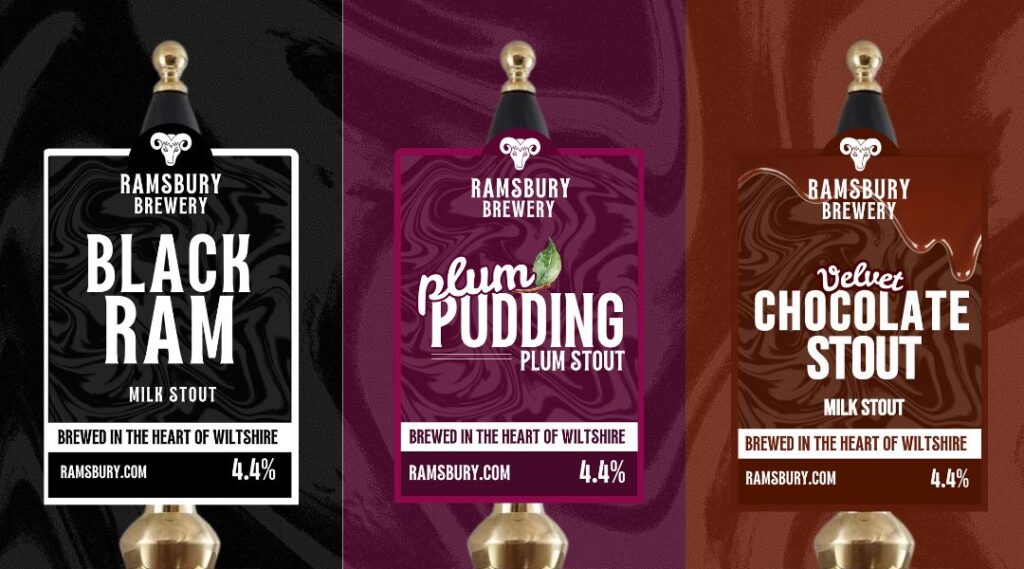
Take our three seasonal stouts, for example. Black Ram, Velvet Chocolate Stout and Plum Pudding Stout are all brewed to 4.4% ABV, yet each has its own character.
Black Ram has a gentle sweetness, Velvet Chocolate brings a creamy cocoa richness, while Plum Pudding offers darker fruit flavours.
We even brewed a stronger version of our Plum Pudding Stout especially for the 2026 Swindon Beer Festival. At 6% ABV, Big Plum Pudding gave us the opportunity to take the original recipe in a slightly different direction, and we were delighted when it was voted Beer of the Festival.
It’s not one you’ll find in our online shop, but it’s a nice example of how we can experiment with different strengths while working with a familiar beer.
Discover Stout at Ramsbury Brewery
The best way to understand stout is to try a few different examples and discover which flavours appeal to you. Our three seasonal stouts are all available in mini kegs.
There’s quite a bit more to stout than its colour, and we’re always happy to talk beer.
And if you’d like to see where our beers are made, why not join us for a Brewery & Distillery Tour?
Frequently Asked Questions About Stout
Is stout stronger than lager?
Not necessarily. Although stout is often thought of as a stronger beer because of its dark colour and rich flavour, its alcohol content can be very similar to lager. Most standard lagers fall between 4% and 5% ABV, while stout varies considerably depending on the style. At Ramsbury, our three seasonal stouts are all 4.4% ABV, making them comparable in strength to many everyday lagers.
Should stout be served cold?
Stout is best served cool rather than ice-cold. When a beer is too cold, some of the roasted malt flavours and aromas can become harder to appreciate. I’d recommend serving stout at around 8-12°C, allowing it to warm slightly in the glass as you drink. You’ll often notice more of those chocolate and coffee notes beginning to come through.